Details of the 1947 Nickel: Design, Composition, and Minting Characteristics
The 1947 nickel is a U.S. circulation coin. The coin is not valuable by itself, but still useful for numismatists as a reference coin. Thus, if one knows how the piece was made and what features it has, they can judge condition, authenticity, and market value more accurately.
General Overview of the 1947 Jefferson Nickel
The 1947 is a part of the Jefferson nickel series, running from 1938. These coins were used daily across the United States. By 1947, minting had returned to normal after the war. Materials, production methods, and quality were stable.
This coin reflects typical U.S. Mint practices of the time. It was made for mass use, not for collectors. Because of that, most surviving examples show clear signs of wear.
Core Specifications and Identification Data
Feature | Details |
Coin type | Jefferson nickel |
Year | 1947 |
Denomination | Five cents |
Composition | Copper-nickel alloy (no silver) |
Weight | 5.0 grams |
Diameter | 21.21 mm |
Edge | Plain |
Obverse | Portrait of Thomas Jefferson |
Reverse | Monticello |
Mint marks | Present on reverse, near Monticello |
Intended use | General circulation |
On these data, every collector needs to rely on when identifying what a correct 1947 nickel should look and feel like. Any major deviation usually points to damage, wear, or misidentification rather than a true mint variation.
From a collector’s point of view, this overview sets expectations: the coin is common. The value of this nickel depends on preservation, not age alone. That is why the coin can be used as a comparison one for checking condition, strike quality, and surface.
Design Details: Obverse and Reverse
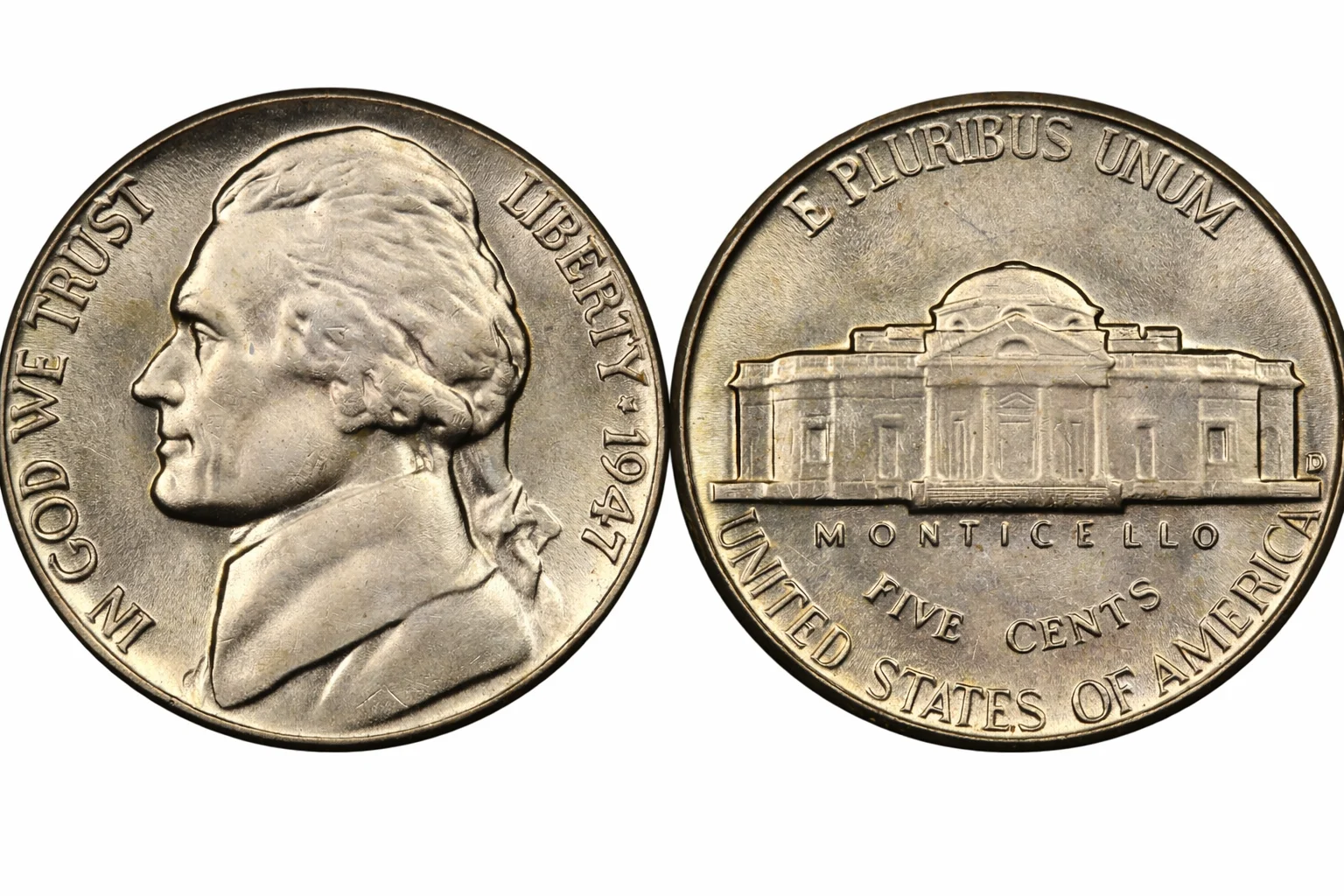
Obverse
The obverse shows Thomas Jefferson facing left. The relief is moderate and was designed for mass circulation, not long-term preservation. When the coin is new, the facial details look sharp. With use, those details fade quickly.
Areas that wear first:
Jefferson’s cheek
Jawline
Hair above the ear
The inscriptions include LIBERTY, the date, and IN GOD WE TRUST. On circulated coins, the date often shows wear. The last digit is usually the weakest point. This leads to confusion with nearby years. This effect comes from wear, not from minting errors.
Main points to remember:
Soft details usually mean circulation wear
Flattened dates are common
Strike quality in 1947 was stable
Weak features rarely indicate poor minting
Reverse
The reverse shows Monticello, Jefferson’s home. Its straight lines and steps help collectors judge wear. These details disappear faster than most inscriptions.
Typical wear areas:
Steps below the building
Column separation
Roof edges
The inscriptions read E PLURIBUS UNUM, FIVE CENTS, and UNITED STATES OF AMERICA. For quick grading, clear letters matter more than sharp architectural lines.
Common observations:
Soft steps are normal on circulated coins
Weak columns usually result from use
Letter clarity often survives longer than building details
Collectors sometimes assume weak steps mean a weak strike. In most cases, the coin simply circulated for many years.
Metal Composition and Physical Specifications
The 1947 nickel uses the standard copper-nickel alloy. It contains no silver. The composition is stable and well documented.
Main details:
Composition: copper and nickel alloy
Weight: 5.0 grams
Diameter: 21.21 mm
Edge: plain
This composition explains several things. The coin has no melt value. Its market price depends entirely on condition and demand. It also explains why the coin resists corrosion better than silver issues from earlier decades.
The difference between this coin and wartime nickels is clear. Wartime nickels used a silver alloy due to metal shortages. The 1947 issue marks a full return to standard materials.
Minting Details
In 1947, Jefferson nickels were struck at three U.S. mints. All used the same design, metal, and standards. Visual differences are minimal.
Mint Marks and Production
Mint marks appear on the reverse, near Monticello.
Mint | Mint mark | Approximate mintage |
Philadelphia | none | ~95 million |
Denver | D | ~37.8 million |
San Francisco | S | ~24.7 million |
Important clarifications:
Philadelphia coins do not have a mint mark
This absence is normal, not an error
On worn coins, mint marks can be hard to see
Surface dirt, oxidation, and wear often hide the mint mark. This is especially common on the reverse.
Proofs, Variations, and Value Differences
There were no proof Jefferson nickels struck in 1947. Proof issues appeared later. So, all 1947 nickels were made for circulation.
What collectors should know:
No major design varieties exist for this year
Minor die differences are known but not sought after
No mint mark is significantly more valuable by default
Value differences depend mostly on the condition. A sharp San Francisco coin can be worth more than a worn Philadelphia example, but the mint alone does not create rarity.
High production numbers explain why the 1947 nickel remains common today. Millions entered circulation, and many survived. Thus, when collecting nickels, you should focus on preservation of the coin, not the mint origin.
Condition and Wear: What Collectors Actually Evaluate
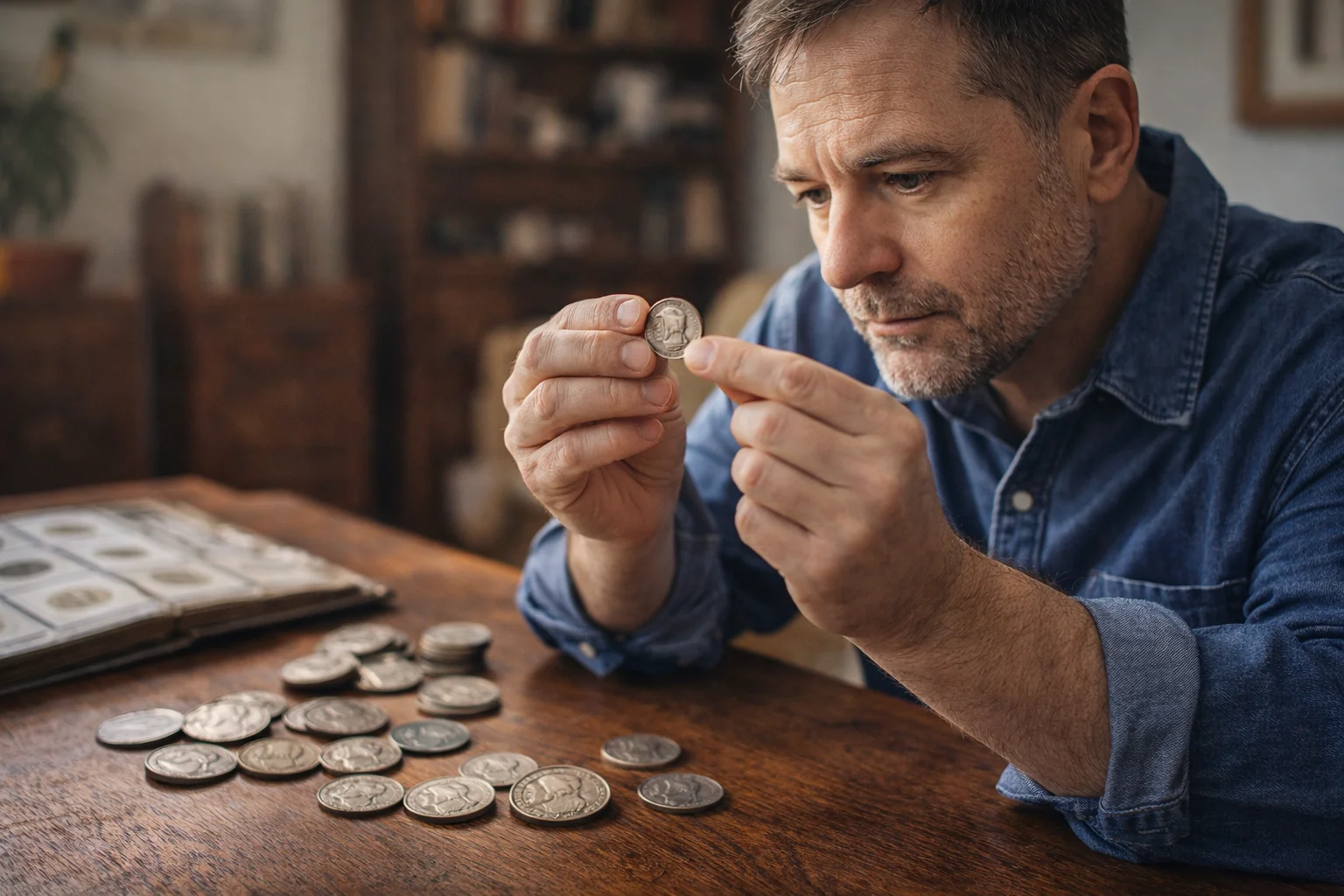
Are 1947 nickels among coins worth money? This question comes up often. The answer depends on the condition. It is not a secret that the condition is the main factor affecting the coin’s value. This rule applies strongly to the 1947 nickel.
Common wear points include:
Jefferson’s cheek and jaw
Hair details
Monticello steps
Letter edges
Most surviving examples are in circulated grades only. Fully uncirculated pieces exist, but they are rare and can be found in rolls or in stored collections. Coins with original luster and clean surfaces reach the highest numbers immediately.
Estimated Market Value
Please, check the table below to see typical market ranges for a standard 1947 Jefferson nickel. Minting errors and special varieties are not included.
Grade | Condition description | Typical value range |
G–VG | Heavy wear, flat details | Face value – $0.20 |
F | Clear date, worn portrait | $0.20 – $0.40 |
VF | Moderate wear, strong lettering | $0.40 – $0.80 |
XF | Light wear, visible hair detail | $0.80 – $1.50 |
AU | Slight wear, traces of luster | $1.50 – $3 |
MS60–MS63 | Uncirculated, contact marks | $3 – $8 |
MS64–MS65 | Strong luster, sharp strike | $8 – $25 |
MS66+ | Very sharp, high eye appeal | $40+ (scarce) |
Disclaimer: These values reflect typical ranges that change over time. Please check the current market ranges when buying or selling.
Conclusion
The 1947 nickel is not rare, not a surprise find. Its value comes from learning details and understanding nuances. New collectors can study these coins to learn grading or use them as a reference point.
How to know if the 1947 nickel is valuable? Manual research takes time. So, many collectors start by using the app Coin ID Scanner. It is a practical starting point to review coin details and estimated value during sorting. But remember, even when using this best coin value app, the final value still depends on condition, market demand, and realistic expectations.
Also, remember that this coin reminds collectors of a simple rule. Knowledge matters more than hype.